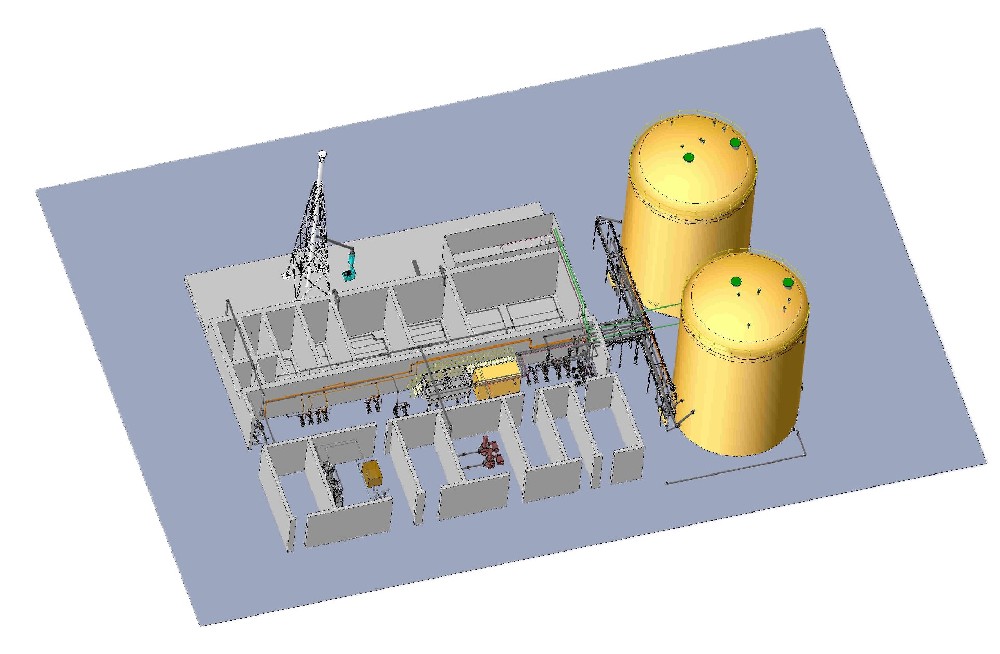
Project Overview
- The Food Waste Wastewater Treatment Project is a supporting facility for a food waste disposal project, specifically designed to treat high-strength organic wastewater generated from food waste pressing, oil extraction, and anaerobic digestion processes, ensuring the harmless and resource-oriented disposal of food waste in the region.
- The project is designed with a wastewater treatment capacity of 50 m³/d.
- The wastewater is classified as high-strength organic wastewater, containing substantial amounts of oils and fats, suspended solids, and food residues, with high concentrations of COD and BOD.
Key Technical Challenges
- Wastewater quality and flow rate fluctuate significantly with food waste collection schedules and composition, while odor control presents considerable challenges. The treatment process must be optimized to accommodate these fluctuations while ensuring both compliant discharge and effective on-site environmental management.
- High concentrations of oils and fats, as well as suspended solids, are prone to causing equipment scaling, pipeline blockages, and membrane fouling. The pretreatment stage must be strengthened to efficiently remove oils and suspended solids, ensuring the stable operation of subsequent treatment processes.
Process Flow
Food waste wastewater (after oil separation) → Collection Tank → DAF Unit → CSTR Anaerobic Reactor → Fluidized Bed Anaerobic Reactor → Intermediate Sedimentation Tank → Two-Stage A/O → MBR Tank → Micro-Flocculation Sedimentation Tank → Clear Water Tank